
What are dental sealants?
Sealant is a clear coat. Sometimes it does have a tooth-color code that is used to prevent cavities in the tooth. Usually, it's placed in a fissure of the tooth, and the fissure is sealed so you don't get any cavities coming through. Kind of like you're getting grout in between the tiles. The same thing—you put something in there in the seal.
The only difference is that the grout is placed between two separate tiles. This one, the fissure is in the tooth. So you seal the tooth itself, right? So that's how it works.
What are the different types of dental sealants?
There are sealants that seal fissures. Basically, you have an indentation in the tooth that is sealed with a clear coat or with a tooth-color coating material.
And there's also a type of sealant that seals the tubes. What does that mean? Well, the tooth is porous like a sponge, right? So it has holes, and the way those holes are positioned, it's kind of like sun rays. So the sun is in the center, and the rays go outside of it. This is the total reverse of it. The pulp is in the center, and the rays are the tubules or the tunnels that go from outside of the tooth into that center where the nerve hides.
So, there is a clear-coat sealant that could be used, especially for a very sensitive patient, that you would seal, and then the tunnels are sealed, not permitting the temperature to penetrate to the nerve and bother you. So those are the two types of sealants that are available for dentists.
How soon can I brush my teeth after getting dental sealants?
Usually, as soon as you get them, they set, and you don't have to wait at all. You can eat right away.
How long do dental sealants protect teeth?
It depends on the type of sealant that is used. Usually, if it is a clear-coat sealant that seals the tunnels of the tooth and reduces sensitivity, that lasts up to 6 months to a year. The other sealant, the one that prevents dental cavity formation that is done for the fissure of the tooth, can last for many years. Of course, it depends on your bite or how you take care of your teeth, but it can last you years.
Are dental sealants done only for children?
No, they are even done on young adults aged 13-18. However, adults can benefit from sealants too.
Dental sealants, also known as fissure sealants, are used to fill cavities and reduce tooth decay. Sealants are usually placed on the top of molar and pre-molar teeth surfaces since the natural shape of these types of teeth are more susceptible to plaque build up.
Permanent molars are the most likely to benefit from sealants. The first molars usually come into the mouth when a child is about 6 years old. Second molars appear at about age 12. It is best if the sealant is applied soon after the teeth have erupted, before they have a chance to decay.
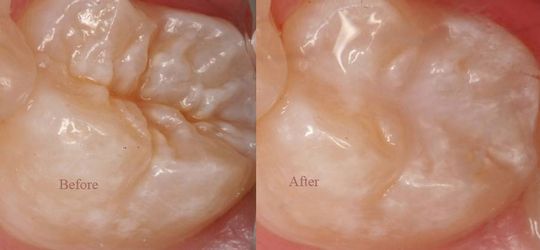
Applying sealants does not require drilling or removing tooth structure. The process is short and easy. After the tooth is cleaned, a special gel is placed on the chewing surface for a few seconds. The tooth is then washed off and dried. Then the sealant is painted on the tooth. The dentist or dental hygienist also may shine a light on the tooth to help harden the sealant. It takes about a minute for the sealant to form a protective shield.
Sealants can only be seen up close. Sealants can be clear, white, or slightly tinted, and usually are not seen when a child talks or smiles.
As with anything new that is placed in the mouth, a child may feel the sealant with the tongue. Sealants, however, are very thin and only fill the pits and grooves of molar teeth.
Can dental sealants help with sensitive teeth?
Of course, if it's a clear coat that seals the tunnels, then yes, that would be helping to prevent sensitivity. So it will help you with sensitive teeth.
However, the fissure sealant doesn't help with sensitive teeth. It just helps prevent further dental decay. So you're not going to get carious formation in that tooth when you have the sealant.
Can you get dental sealants if you have fillings in the tooth or tooth decay?
The answer is no. If you have decay, a dental sealant is not really the answer to that. The decay needs to be removed; otherwise, the decay will continue to progress and eventually can cause pain and tooth loss. So, for decay, sealant is not the right product. It's a preventative product. It prevents the formation of decay, but once you have decay, it's too late for sealants.
How much does it cost to get a dental sealant applied to my teeth?
The charge is usually per tooth. It depends on what type of sealant is used, whether it is a sealant to prevent cavities. Those are usually not as expensive, and on average, it would be between $30 to $50 a tooth. If it is a sealant that is a clear coat to reduce sensitivity, that is a little bit more expensive. So it's between $80 and $150 per tooth. Again
How can I schedule an appointment with Steinway Family Dental Center to have dental sealants applied to my teeth?
If you’re searching for quality dental care, we’re here to help. Call (929) 238-9944 or email [email protected] to schedule your visit. Our team is committed to keeping your smile healthy.